ROFFEKE OFFICIAL SELECTION 2023 (Partial Listing)

ROFFEKE OFFICIAL SELECTION 2023 (Partial Listing)
Click laurels to watch the playlist.

ROFFEKE OFFICIAL SELECTIONS 2021

ROFFEKE OFFICIAL SELECTIONS 2020

ROFFEKE is proud to partner with Additude Africa

ROFFEKE is proud to partner with Additude Africa
"Additude Africa promotes time credits as a means of encouraging the youth to be involved in community building activities in order to add a new dimension in their lives and make a positive contribution to their communities."

ROFFEKE is proud to partner with ipitch.tv

ROFFEKE is proud to partner with ipitch.tv
"Looking for a way to pitch your idea for a television show or movie? Ipitch.tv offers a next generation platform for creators of original ptiches for TV, film and digital media to connect directly with Hollywood producers and studio executives."

ROFFEKE Values

ROFFEKE Values
Friendship (networking), Fun (experimentation), Freedom (purpose, empowering, transparency)

SUBMIT YOUR FILM TO ROFFEKE!


ROFFEKE logo by Jozie of Kenyan band 'Murfy's Flaw'

ROFFEKE is a member of the Universal Film and Festival Organization

Featured Post

Comments on "The ABC of ROFFEKE" Screenings (September 2015 at iHub)

I liked all the films especially the one for Superman [“This is Joe”] and the last one which was longer [“ Frontman ”]. I look forward to at...

The Indie Bible

Monday, January 2, 2023

Interview: Riker Lynch - writer, director, actor, producer of "Aliens on Halloween"

ROFFEKE: I really enjoyed watching your interview on Hollywood Approved (Episode 7). You said: “I do a lot of improvisation with my actors and I let people take the words and throw them out and put their own little vibes on it.” One of my favourite fun scenes (and “Aliens on Halloween” is full of fun scenes!) is the one where Titus Makin Jr.’s character meets the aliens. How much of that fun dialogue was from your script and how much was Titus just putting his unique spin on it?

RIKER: This is one of my favorite scenes too. Just trying not to laugh while we were filming made it even funnier. Titus is an incredible actor and he’s always working on something whether it be film, TV, or music. We were lucky enough to have him for a few hours in his busy schedule so I basically told him the lines do not matter. I really only needed him to mention “Halloween" and establish that he’s the owner of the house. I had written the character to be one of those people that just talk a lot and fast and don’t really listen and Titus was absolutely hilarious. I would say 90% was total improv. We did 2 takes and cut together the best of the best. It was all so good Gordy and I had a ton of fun working on that scene in the editing room.

ROFFEKE: You also said: “I put my friends’ music in it…I sent them texts, ‘Hey I’m doing this movie. Can I use your music?” What criteria did you use to pick the songs? Was it the lyrics? The vibe? The genre?

RIKER: I pretty much just went with the friends of mine that had songs that fit the vibe that I was going for. I’m great friends with the band New Beat Fund and their song Halloween Birthdaze was obviously a perfect fit. On a small-budget short film like this, you’re kind of looking for anyone who will give you permission to use their work as a favor so I knew all my friends would help me out in that regard. I’m very fortunate to have very talented friends in the music industry. 

ROFFEKE: You said about Ted Lasso: “…I think is the greatest show to ever touch television because we all need this in our lives, we all need this energy and this positivity…I want to spread as much optimism and positive energy as possible…” Apart from “Aliens on Halloween” - which I think definitely does spread optimism and positive energy -  and your various creative and artistic ventures, how else do you spread optimism and positive energy?”

RIKER: I do my best to just be an uplifting spirit in whatever I’m doing. To radiate enthusiasm and positivity everywhere I go. My music is a big part of that because I believe music can change your mood almost quicker than anything. My latest song “Remedy" is all about being the remedy for someone who’s having a tough time. I hope my music can have a positive impact on people’s spirits. 

ROFFEKE: Your top three memories from your 2016 Safari in Kenya?

RIKER: Oh that’s tough to pick. The whole thing was truly amazing. I was there with my four brothers and my dad. The first game drive early in the morning was just so surreal because I really didn’t know what to expect and seeing all these amazing animals up close in person is so spectacular. We saw a ton of elephants on our first day. 

Another time we saw a momma lion playing with her cub. That was so cool. We were in a jeep-like truck with no doors and we kept getting closer and closer to watch them and at one point the cub kind of wanders closer to us and gave us a little baby roar. He walks on and then the mom gets very close to us and I remember our safari guide says, “just stay calm and don’t look her in the eye.” I could’ve reached out and touched her, she was THAT close. Did I mention there were no doors in our truck? Such powerful animals.

We also got to play some music for these kids in one of the tribes there. I’m not sure if that’s correctly how I should describe them but they were such lovely humans. They were very interested in our guitars. This was back in 2016 so my band R5 was still going strong and we played “All Night” and “Dark Side” for them.

ROFFEKE: I interviewed Gordy De St. Jeor (director of The Thrill), who was also part of “Aliens on Halloween” and happens to be your cousin. He gave a thought-provoking answer to my question about whether the artist’s struggle is worth it. Please comment on, add to (or even dispute) his answer:

RIKER: Gordy is so talented. I’m so fortunate to be able to collaborate with him. He’s someone I deeply care about. Not only family but one of my greatest friends. 

I totally understand his view on the struggle. For me, the “why do I do this” well it’s because I believe it is my purpose on this planet and in this life to bring people joy through film, television, music, through stories. And on the "struggle for the art", I don’t really feel that I have a real “struggle” or sacrifice I guess. Sure I feel struggle if I’m stuck on a scene or a line or I’m not feeling inspired but that’s all part of the process. I love the quote, “Nature never hurries but everything is accomplished.” I really believe in that and I’ve also come to simply enjoy the journey that is life. There is no destination, it’s all about the journey, and part of the journey is going to be struggling. I know that. And it’s ok. Part of the journey is also going to be the most magical thing you’ve ever experienced. At the end of the day no matter how much struggle there is, I love what I do and I feel so grateful I get to do what I do. 

Hollywood Approved - Episode 7


Tuesday, December 13, 2022

Interview: Gordy De St. Jeor - Director of "The Thrill"

"My name is Gordy De St. Jeor. I'm 19 years old, but I've been working in the film industry since I was 13 as an actor. Eventually, I decided I wanted to create films for myself, and I've been DP'ing and directing films and music videos ever since. I have a strong background in music, having been on tour 5 times shooting video content for bands like "The Driver Era", "Iron Maiden/The Raven Age", and "Jesse McCartney", while also being a musician myself. I have also shot music videos for artists like "Wolfgang Van Halen" and "Kat Von D." I have DP'd a few short films over the years, and directed a few small ones, but this film was a passion project of mine, and I'd like to call it my directorial debut."

ROFFEKE: Your bio is so interesting! You say you have “a strong background in music, having been on tour 5 times shooting video content for bands…while also being a musician myself.” How did your being a musician help you in shooting video content for bands?

GORDY: I would say having a basic understanding and passion for music in general has helped me more than anything. Being able to anticipate when moments are going to happen is crucial to getting the shot sometimes. Also being a lover of music and being able to put that passion into your work is absolutely crucial in my opinion. 

ROFFEKE: What are some lessons you learned from creating this content for bands?

GORDY: I think above all I've learned that you need to not be afraid to get creative. Especially when you are on tour shooting the same show for an extended period of time, you need to be able to find ways to still make it interesting. This is different for every project, but you need to be willing to cross into the uncertain and take creative risks to keep the product interesting and exciting. You also want to always be prepared to capture the moment, even if you won't use most of the footage. 

ROFFEKE: What are some similarities and/or differences between shooting such content for bands versus filming narrative content, like your awesome short film “The Thrill”?

GORDY: The processes of shooting with bands and shooting narrative film couldn't be more different in my opinion. The approaches are almost completely opposite, in one you have no control over what the subject is going to do, therefore you are trying to predict and capture anything that does happen, and then make some sort of story out of it later. The other is meticulously planned, and you know exactly what you are shooting when you are shooting it. The goal is to try and insert the same spontaneous energy into the narrative work, and give the audience a sense of uncertainty throughout the film, which is a very tough task. I would say for this film, knowing what it is like to shoot bands on stage with thousands of fans helped a lot in trying to recreate that energy in a completely fabricated environment. 

ROFFEKE: For musicians wanting to get into filming or musicians wanting to collaborate with filmmakers, what advice would you give them?

GORDY: I think music and film are extremely compatible, and my advice would be to try to have fun and experiment with that compatibility. For me, it's really fun to try and see how different visuals react with different music. Music has the power to change the tone or message of a visual completely, and the same is true in the reverse. I would say trust your collaborators and don't be afraid to step out of the box and see how mixing these mediums can create new ways to express complex feelings and situations. Not to be unoriginal, but enjoy the process because for me, music and film are married and it's always extremely exciting to see what they can do together. 

ROFFEKE: In your director’s statement, you say “I made this film to explore the struggles we go through as artists, and to question, whether or not that struggle is worth it for the thrill.” As a creative, I know for sure that the struggle is worth it. In your view, WHY is the struggle worth it? What makes it worth it?

GORDY: To be completely honest, I'm still not sure if it is worth it. I know that if I'm not expressing myself in a creative way I might go crazy, but I'm not fully convinced that sacrificing yourself as it seems Daniel does in The Thrill is really worth the benefits that come with it. I think it's important to address the fact that a lot of artists, struggling or not, are not mentally healthy and have problems that they are actively dealing with through their chosen medium. And while that process can be and is often therapeutic, I'm not convinced that it can solve all of your problems when you dig yourself that deep. What happens when you sacrifice yourself for something and it works? What about the moment after? What about when it doesn't work? What are we really doing to ourselves? Why are we doing this to ourselves? I don't mean to be dark, I do really think art is one of the most important parts of us and we wouldn't be human without it. The act of expressing yourself is one the best gifts we can share with the world, and it has the power to bring people together and understand who we are on an indescribable level. But I think it's important to look deeper and ask ourselves WHY we do what we do and always question our values, especially when you are betting everything on them. 

WATCH "THE THRILL" TEASER

Friday, November 25, 2022

Interview: James Fouche - Writer and Producer of "Crossing Borders"

ROFFEKE: You are the writer and producer of "Crossing Borders". What elements of the screenplay changed, from the time you took off your writer's hat and put on your producer's hat? 

James Fouche: Crossing Borders was conceptualised and scripted as a TV series that would run for at least three seasons. While this is still the dream, filmed the short film to be a completed short film. Very little changed from script to screen. As the words became reality, the screenplay became the truth for everyone on set, even for me as I tried to switch between my writer and producer hats. We all believed in it. Strange as it sounds, that was liberating.

ROFFEKE: What inspired this story?

James Fouche: Immigration is as current as it is sensitive. I wanted to touch on the crossing of borders, or the policing thereof. The theme inspired the tone, which is why amber and yellow was generously incorporated throughout. Beyond that, I wanted to paint a truly African version of Jack Reacher, someone the whole world could easily relate to regardless of creed, culture, or colour.

ROFFEKE: Why the near-future setting and what were the advantages and challenges of setting the story in the near-future?

James Fouche: I chose the near future, assuming that by that time South Africa would have taken strides towards better border control. I further assumed that the policing of borders would become outsourced, much like bounty hunters in America. This practice of outsourcing immigration processes in SA was trialled in the early 2000's, but quickly discarded due to the exposure of corruption. The challenges were considering the surroundings and the transportation for such a small leap into the future. Ultimately, by looking at the past, I predicted that not much would change.

ROFFEKE: The theme of crime runs through "Crossing Borders" and your books "Jack Hanger" (a criminal mastermind kills his brother) and "King of Sorrow" (the protagonist "is pitted against the corporate world, where crime, mystery and intrigue hide in plain sight"). Why crime and not more "hopeful" themes? What would you say is the hopeful/hopepunk element in "Crossing Borders"?

James Fouche: I think crime is an ever-present element today. To avoid talking about it, certainly won't solve anything. I believe most crime writers do so in the hopes that they will unpack something, raise concerns, and offer possible solutions in the process, It's not always doom and gloom in the mind of a crime writer. In the wake of sadness and misery, often follows rebirth, renewal and hope for a future generation. The lead character of Crossing Borders, as I envisioned the TV series, was an African version of Jack Reacher. A lone hero who seeks only to do his job, who believes in justice, whose love is pure, whose passion is admirable, and who does good without being asked to do so. There is nothing more hopeful than that.

ROFFEKE: The lead actor, Aphiwe Nqevu, is so talented! Did you have him, or someone like him, in mind while writing the screenplay and as the producer, how much of a say did you have in the casting process?

James Fouche: I conceived the character of Bhongo just before the pandemic came around. During the national lockdowns I kept pecking at the character and discussed him with my wife, who is often my sounding board. I had engaged with Aphiwe numerous times prior to this. Then, one day, as we sat in a local coffee shop, Aphiwe strolled in without knowing that we were there. Something in my mind just clicked. I looked at my wife and said that I was looking at Bhongo. My wife immediately agreed. Aphiwe is the kindest soul, and is often called the township pastor. His natural flair for acting and how he bloomed after Neels van Jaarsveld arrived on set, has me convinced that he has what it takes to become a professional actor.

ROFFEKE: The whole film was a treat to watch but my (Mildred Achoch) favourite moment is the running-across-the-field scene. The accompanying song - and of course I am very biased - adds to the excitement. Why a rock song and not, say, Kwaito or House or Hip Hop? (This question is for you and/or the director, Chris Wilson).

James Fouche: That scene was the director's pride and joy. As an avid Guy Ritchie fan, Chris came to me with a proposal for the chase scene. I was the producer and he was the director. It was my job to trust him implicitly and it was his job to pour his creativity and passion into the project by blowing life into the words. While I might have given guidance to the musical tone, it was Chris who chose that song. I surmise that he felt my aspirations of taking a truly African hero and showcasing that to the world in a way that made him instantly human and relatable. We wanted music that didn't denote a specific location, again crossing borders and reaching a wider audience.

ROFFEKE: Advice for writers who want to become writer-producers?

James Fouche: Keep at it. Do not stop. Write, write, write.


Read a review of Crossing Borders HERE.

Film Festival Mastery Replay

On September 21st, I had the honour of attending a Film Festival Mastery Masterclass, featuring Jon Fitzgerald, co-founder of Slamdance. It was fun and informative and here is the link to the replay:

FILM FESTIVAL MASTERY REPLAY

My key takeaway was that there's a film festival out there that is just right for your film, no matter how niche your film is. You just need to know what your goals are.


Review: Crossing Borders (Directed by Chris Wilson)

Synopsis: "Bhongo Mhlope, a South African immigration agent is on the hunt for a Zimbabwean foreign national who has been scheduled for deportation. He calls in the help of Benny, a police detective and old friend. After the successful apprehension of his 'target', Bhongo and Benny discuss a greater menace growing in the town of George."

Reviewer: Love Kassim.

I love the music in the background because it takes the movie further and is purposeful throughout.

The color choice is spot on since it made the film vibrant and lifts the spirit of the movie 

The camera angles and lighting, especially when the two were running in a field in slow motion, gave it a gripping experience.

The actors did justice to their roles and this film placed them in a recognizable social context.

I love that the film utilized short, instantaneous and effective scenes.

Politically, the film shows the aspect of Immigration and deportation especially of criminals in South Africa and the struggles and lengths the authorities take to ensure criminal gangs are dealt with.

An intriguing piece that left me yearning for more.

Monday, October 31, 2022

Crossing Borders: Spotlight on "Finding Lulu"

Finding Lulu Synopsis: "After learning about the culture of school shootings in America, Lulu's Kenyan community bands together to prepare her for life in U.S. schools."

Director (Gayatri Kumar) Statement: "I'm a proud American. I believe my country is considered to be number one for a reason. But this American passport quickly begins to lose value if our children's safety doesn't rank number one too."

In a Psychology Today article, Michael Friedman, Ph.D writes that Dee Snider's "greatest contribution is that he has publicly and directly challenged the stereotypes that heavy metal musicians and fans faced since the inception of the art form - with heavy metal musicians and fans stereotyped as unintelligent and dangerous."

How dangerous? So dangerous that Marilyn Manson was accused of causing the Columbine massacre.

In "Columbine: Whose Fault is it?" Marilyn Manson speaks out:

"When it comes down to who's to blame for the high school murders in Littleton, Colorado, throw a rock and you'll hit someone who's guilty. We're the people who sit back and tolerate children owning guns, and we're the ones who tune in and watch the up-to-the-minute details of what they do with them."

Marilyn Manson wrote the article in 1999, the year that the Matrix was released, when Yahoo was still king of the Internet, before MySpace, Facebook, Twitter, Instagram and TikTok. 

Marilyn Manson goes on to point out that:

"We applaud the creation of a bomb whose sole purpose is to destroy all of mankind and we grow up watching our president's brains splattered all over Texas. Times have not become violent. They have just become more televised. Does anyone think the Civil War was the least bit civil? If television had existed, you would be sure they would have been there to cover it, or maybe even participate in it, like their violent car chase of Princess Di. Disgusting vultures looking for corpses..."

In February 2018, four years before the start of the war in Ukraine, Matt Taibbi wrote an article titled "If we want kids to stop killing, the adults have to stop, too." He begins by writing that: "Over two decades ago, I traveled to a city in the Russian provinces called Rostov-On-Don to interview a psychiatrist named Alexander Bukhanovsky." The caption of the featured photo reads: "Mourners stand during a candlelight vigil for the victims of Marjory Stoneman Douglas High School shooting n Parkland, Florida on February 15, 2018."

Taibbi goes on to list the variety of things that are blamed for gun violence: racism, violent video games, music lyrics and movies.

Fun fact: The end credits song in Finding Lulu is "Bang Bang (My Schoolmate Shot Me Down)", which is based off Nancy Sinatra's rendition of "Bang, Bang". Quentin Tarantino used Nancy Sinatra's version in the Kill Bill opening scene and said: "I think you'll have a hard time hearing that song after seeing the movie and not thinking about the bride lying in the church."

Taibbi asks: "But what about the fact that we're an institutionally violent society whose entire economy has historically been dependent upon the production of weapons?"  He also asks: "And how about the fact that we wantonly (and probably illegally) murder civilians in numerous countries as a matter of routine?"

This is a good time as any to mention the Melilla Massacre. Some would criticize legal immigrants - like Lulu and her family - and illegal immigrants, like the many who have perished as they pursued greener pastures. Those who belong to the critics camp share this sentiment:

"These guys trying to cross over to europe are giving the rest of us africans who stay home and work hard to overcome challenges and improve our motherland. put all that effort into building africa instead of dying like dogs at the hands of the old slave masters. #MelillaMassacre"

In "Immigration is horror" the writer offers a different perspective:

"Thus there are two kinds of immigrants. The ones who leave by choice and the others who do out of necessity. But, often, their reasons and motivations come from the same place: the conditions they live in are no longer sustainable either physically, mentally, or emotionally."

Taibbi remembers Dennis Kucinich "being laughed at by reporters...whenever he talked about...the establishment of a "Department of Peace"... He just happened to believe we should make nonviolent conflict resolution an 'organizing principle in our society.'"

Like all good films do, "Finding Lulu" offers the space to ask more questions and to think about this complex issue from a variety of perspectives. Below is Love Kasim's review of the film:

"Lulu, a primary school pupil, is relocating to California and is nudged by her fellow classmates on why she needs to go to a place where kids get killed every day.

Gun control and firearm use in America is still very much a hot topic. Firearm deaths occur at a rate more than five times higher than drowning.

Lulu embarks on learning about the steps to take if ever in such a situation, calling the police being one of them. The video shows the Police response time and how long it took for the them to take action in Uvalde and it's just dismal to say the least.

She resorts to training with the brave Maasai warriors and masters her inner strength to go through the process.

Some of the drills suggested to help during a school shooting are refuted by the classmates and I think those should be updated realistically.

Despite economic factors, gender, racial, mental health conditions or sexual orientation, everyone has a right to be safe in their classroom and communities and this is what the film is all about .

We should teach children and youth how to minimize social isolation, empathise with others and create a more inclusive and connected school culture."

Watch the "Finding Lulu" trailer in the ROFFEKE World Day for Audio Visual Heritage 2022 playlist.

Wednesday, October 26, 2022

ROFFEKE World Day for Audio Visual Heritage 2022

October 27th is World Day for Audio Visual Heritage. This year, like in 2020 and 2021, ROFFEKE will commemorate the day with a YouTube playlist. The theme of the ROFFEKE World Day for Audio Visual Heritage 2022 playlist is inspired by the title of one of the ROFFEKE Official Selection 2022 short films, "Crossing Borders". All the short films in the playlist cross borders in one way or another.

The short film "Crossing Borders" was directed by Chris Wilson and stars the talented Aphiwe Nqevu playing the role of Bhongo Mhlope. "Bhongo Mhlope, A South African immigration agent is on the hunt for a Zimbabwean foreign national who has been scheduled for deportation."

"Thou Shalt Dance" was directed by Abtin Yaghmaian, an animation director based in Tehran. The protagonist crosses the border between normal and abnormal: "In a normal day a normal man finds an abnormal solution for his problem."

Read - Crossing Borders: Finding Lulu and Cuando Haces Pop

Read - Crossing Borders: Forgotten Song and Maldita: A Love Song to Sarajevo

Crossing Borders: Forgotten Song and Maldita: A Love Song to Sarajevo

Forgotten Song, a beautiful, moving and poignant musical, is directed by Monika Grzybowska, a filmmaker who "believes in cinema with a mission."

Synopsis: "A young boy comes to the Friendship Settlement, where the Soviet builders of the Palace of Culture and Science lived in the 1950s, in search of accommodation for his grandparents from Ukraine. Here he meets a girl singing in the choir, who becomes his guide. Seemingly, it is a story about love that cannot happen because of the war in Ukraine, but more deeply it is a story about finding your identity. Music is an integral part of the film. It is not only the background of the events narrated in the film, but its equal protagonist."

Music also plays a big part in "Maldita: A Love Song to Sarajevo", directed by Raul de la Fuente Calle and Amaia Remirez. Below is a review by Love Kassim:

Bozo Vreco is a musician from Bosnia who in this film introduces us to a world of melancholy and sorrow as he explains growing up in a war-torn country and loosing his friend at a young age. The artist recalls the people he knew and the life he might have had if he hadn't gone through such a dismal upbringing. The war in Bosnia is repeatedly highlighted.

Bozo wears his hair long with kohl around his eyes and dresses in Kaftans; he spins around singing on stage. He believes that a person who sings songs of courage should present nothing but honesty to their audience. He further explains just how hard it was navigating as a queer person from a background who’s sound has influenced his music.The catchy melodies mixed with Bozo’s unmistakable voice gives the song an unparalleled softness.

I believe that this is the kind of sound that takes us on a journey through time.

His powerful highs and extra soothing lows plus the interplay of rhythm might blow your mind as the rich texture of the vocals pull you right back into place.

This music is calm yet so powerful.

This is an artist who tells us our most fundamental stories about ourselves and lost loved ones and when you listen to Maldita and watch the whole film in general, those stories are as relevant today as they ever were.

Crossing Borders: Finding Lulu and Cuando Haces Pop

 "There have been 27 school shootings this year. Maybe by October there'll be 30 more." 

So begins the trailer for "Finding Lulu", a short film directed by Gayatri Kumar and produced by Nyakio Wambui. Then we are asked: "How do you prepare for a country that has more guns than people?" Next, we see a Maasai Moran, sharpening a spear, wearing a Kenyan flag bead anklet. Lulu boldly approaches him and demands: "Nifunze kupigana" - Teach me how to fight.

Synopsis: "After learning about the culture of school shootings in America, Lulu's Kenyan community bands together to prepare her for life in U.S. schools."

 The trailer ends with the chant: "Usiue mtu, usiue mtu" - Don't kill anyone.

"Don't kill anyone" applies to Cuando Haces Pop (Once you pop), directed by Kevin Castellano and Edu Hirschfeld. This fun film with a twist in its tail/tale crosses the border between horror and comedy. Below is a review by Love Kassim:

"Cuando Haces Pop" (Once you pop) presents the story of Alicia and Ruth stranded in the middle of nowhere after they got kicked out of a car that was supposedly taking them to a music festival to perform. Once you pop provides a significant evaluation of the difficulties a band will go through just to get their music played, especially if it's made up of females.

They try to hitchhike to the next town and learn the hard way what it would really take to get a lift. Essentially, the film utilizes short, instantaneous and effective scenes that describe and exaggerate how they are limited to doing whatever the guy wants to get said lift.

The best remark I can give about the song is that it’s slowly infectious and one seems to return and replay it often.The song's infectious nature stems from its well-balanced, enticing sound, its positive vibe and its meaningful lyrics. We hear the interwoven styles of traditional punk and hints of pop, which seem seamless. It is difficult to achieve this mix of styles without being corny and Alicia and Ruth seemed to have done that.

I love the irony of the [not included to avoid spoiling the surprise! :-)] and actually enjoying their music.


Tuesday, September 20, 2022

Of Nyatiti, Psalterium and Artus - raw rock (rockumentary)

 In "Old and Young Team Up to Revive Nyatiti Music in Kenya" Jason Patinkin writes: "...the nyatiti has faded in Kenya. Old players passed away and young people took an interest in rock and hip hop music." The number of Nyatiti makers has also drastically reduced. As noted in this tweet: "We have less than 19 good Nyatiti players and only 5 makers."

One of the Nyatiti makers is Alex Ogwe, here recorded by the Singing Wells project.

Nyatiti maker Alex Ogwe, playing the Nyatiti.

That unique, danceable Nyatiti sound has even made its way to Andrew Bird's album, in the song "Nyatiti".

The song "Nyatiti" is featured in Andrew Bird's album

Artus is "a rock group just as untameable as the bear that inspired their name. For twenty years, Artus has been inventing a unique sound somewhere in between their Gascon roots and modern experimentation."

Thomas Baudoin, the Artus member who plays the Psalterium, says in the rockumentary "Artus, raw rock" directed by Alexandre Cartigny and Sonia Moumen: "I feel like we adapt to our evolutions. Adaptation means changing the rules, the recipes."

"Artus, raw rock" (French version)

Jean Baudoin "Papeth", a Psalterium creator, is also featured in the rockumentary. He says: "Nobody makes psalteriums anymore. I did some research and only got to see a few. When I went to museums in Paris, they asked me if I was a researcher, but since I was just interested personally, I wasn't allowed to touch them."

You can view (but not touch?) a Nyatiti in the National Museums of Kenya's "Cycles of Life Gallery" and in the University of Illinois' Spurlock Museum of World Cultures. In the Museum of the IAGA in University of Nairobi, you can view "a nyatiti musical instrument from the Luo culture and other materials donated by Prof. Florida Karani..." The location of the museum is the basement of Education Building on the Main Campus.

In a Ted Talk titled "Museums in Progress: Decolonizing Museum" Hannah Mason-Macklin begins by asking: "What does the movie Black Panther have in common with museums?" She goes on to highlight the different power plays in the movie's museum scene. One of the power plays is about space. Hannah notes: "We hear from Killmonger that he feels uncomfortable the second he is in that space. And that is not an uncommon feeling for visitors of colour in real life. To feel unwelcomed or watched in museums."

Hannah Mason-Macklin

"...I wasn't allowed to touch them. "You won't have access to the instrument, you'll stay behind the glass." Or in front really, depending on where you're standing!" - Jean Baudoin, Psalterium creator, in "Artus, raw rock" rockumentary.

Here are some more quotes from the opening minutes of Artus, raw rock:

"One of the constants of Artus is to practice the intangible cultural heritage of Bearn and Gascony."
- Mateu Baudoin, song and violin.

"To me, the universe of Artus is to always try to explore what's new around you. You can't look ahead if you first don't look closely."
- Alex Toussaint, drums.

"Some come from rock, others from traditional music. That's what's links us together...our differences."
- Nicolas Godin, electric guitar, percussion, effects.

Friday, July 8, 2022

Reviews: One-Hit Wonder - directed by Amanda Dow

You can watch One-Hit Wonder HERE:

"I love the concept of this video. Was he a ghost? Did the cab lady have something to do with his death? Many musicians are a disturbed lot. With all they go through, it's no surprise this was his way out of misery. To be that creative and still haunted by invisible demons that can't be explained is hurtful. I wanna reach out and just hug them."

Review by Love Kassim.

"I like the suspense - the ride to an undisclosed destination. The conversation is cordial. However, the eventual news hurts. It's a sad twist of fate that he didn't replicate the success of his hit song "Humma Humma Ding Dong". What a tragic demise of a popular celeb devastated by a fallen career. One-Hit Wonder reminds me of a gruesome suicide of a favourite friend I cherished. Like the cab driver, I had just dropped him at his apartment."

Review by ROFFEKE Reviewer.

For information about mental health and creativity, check out ROFFEKE's mental wellness division, rockafya.blogspot.com

Check out a comparison of: Clay Calloway of Sing 2 and Ellery Demarco of One-Hit Wonder (Directed by Amanda Dow)

Related post: 


Thursday, June 30, 2022

Aphorisms for a Wounded World - directed by Robert David Duncan

The setting for "Aphorisms for a Wounded World" is an "imaginary place, built from AI-enhanced digital art." You can watch this micro-short film between June 30th and July 31st 2022, HERE:

In a ROFFEKE Radio interview, I asked director Robert David Duncan: "What are your views on Artificial Intelligence and creativity?" Here is his answer:


Wednesday, March 2, 2022

Peace

"When the power of love overcomes the love of power, the world will know peace." - Jimi Hendrix.

"Darkness cannot drive out darkness: only light can do that. Hate cannot drive out hate: only love can do that." - Martin Luther King, Jr.

"If you want peace, you don't talk to your friends. You talk to your enemies." - Desmond Tutu.

"Peace begins with a smile." - Mother Teresa.

"The world is now too small for anything but brotherhood." - Arthur Powell Davies.

PEACE PLAYLIST

Sunday, February 20, 2022

Of "African" Products and "Mzungu" Music

In an entrepreneurship forum I recently attended, one participant was quite vocal about the need for entrepreneurs to provide African goods and services. This brings up the question I always ask myself whenever I come across concepts such as “Kenyan film” or “Kenyan story” or “buy Kenyan”.

Are Kenyan or African goods and services those created and sold by Kenyans/Africans or are they only those that are uniquely Kenyan or African? Is an African entrepreneur who deals with smartphones made in China, providing African goods and services? Does the foreign nature of the goods/services he provides disqualify him from being categorized as an African entrepreneur? What about an African agri-entrepreneur who deals with genetically modified seeds? What about an African pharmacist who largely sells products created outside of Africa?

What about the European, American and Arab slave traders who were dealing with African “goods”? Were they African entrepreneurs?

African slaves were exchanged for foreign goods:

Trade Relations among European and African Nations.

The business of barter on the pre-colonial Gold Coast.

What about rock ‘n’ roll, whose roots can be traced to the slave trade mentioned above? Is rock ‘n’ roll an African product? Is rock ‘n’ roll made by an African still “mzungu” music? 

(Written by Mildred Achoch.)

Coda: "Jean-Baptiste Say pointed out in his own writings that it was entrepreneurs who sought out inefficient uses of resources and capital and moved them into more productive, higher yield areas. Simply put, entrepreneurs seek opportunities for profit and, by doing so, create new markets and fresh opportunities. By constantly disrupting the balance of competition, entrepreneurs prevent monopolies from forming and create a wide diversity of products that keep consumers consuming and producers producing."Source: Who Coined the Term 'Entrepreneur'? by Andrew Beattie. 

Friday, February 4, 2022

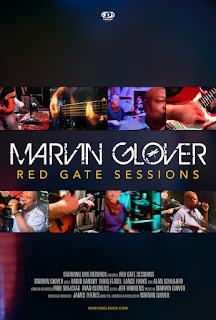
Interview: Marvin Glover - Director of Red Gate Sessions

 ROFFEKE: Many of your artistic works center around themes of hope and empowerment. If, as the saying goes, "bad news sells" why then do you choose to focus on hope and empowerment?

MARVIN: Well I suppose the best way to answer this question is that, by definition, empowerment is the process of becoming stronger and more confident, especially in controlling one's life and claiming one's rights.  The creative works that we develop and the content that we create can often provide hope to those that feel hopeless and also give a voice to the unheard.  This should be empowering!   I had to think long and hard about what kind of human I wanted to be and what kind topics I wanted to raise awareness of or shine a spotlight on.  It's also about thinking about yourself and what you want to represent, as creators we become a brand.

ROFFEKE: You have produced more than 20 films in the short film, documentary, feature length and web series categories. What similarities and differences are there in producing each of these categories?

MARVIN: The work is generally the same.  It takes the same amount of creative energy to make a short film as it does a feature.  The process is the same.  The difference is the budget and timeline!  The elements can vary as with every project but the core items are pretty much the same.  

ROFFEKE: Being a minority - whether in terms of race, gender, etc - is challenging in any field, including the film industry. What has been your journey in giving yourself permission to create?

MARVIN: I have never operated from a deficit, my mantra has always been that I don't need permission to create.  I came into the profession with an edge so to speak.  I had confidence, career experience in other industries that support entertainment, I had a stellar resume of education at some of the best schools.  I am fluid in law, marketing, advertising and social sciences.  I am a renaissance man and ambassador of travel, food, culture and the arts. I find interest in most everything.  I say it's okay to be uncomfortable every now and then; you can learn and grow.

ROFFEKE: Any tips on fundraising for projects?

MARVIN: I was fundraising before the term became saturated.  I have fundraised for every project that I've ever done.  Every musical recording and every film has been supported by my "supporters".  Tip number one: email is the best tool at your disposal to make a real connection.  Tip number two: be authentic, people can smell a "fake" a mile away.  Tip number three: give to others.  Are you out to take someone's hard earned cash and give nothing in return.  Tip number four: Drop the word investors from your vocabulary.  People can support you and your projects, if you want an investor... invest in real estate!  Seriously, in the U.S., if you are a first time home buyer and have decent credit.  Buy a starter home with 3.5 percent down.  Put some paint on the walls, cut the lawn, pull some weeds and anything else reasonable to improve the place and then sell it in a year.  Take the cash that you profit from the sale after you pay off the loan and go make YOUR MOVIE.  It's that simple.  Skip the kissing backsides hoping that someone will fund your bright idea.  What do you have to offer them in return?  Nothing!  Hollywood in general is a closed system so you need a body of work to get a seat at the table these days.  I went to the best film school in the world, that cracked the door open for me.  I wrote my own songs and placed them in my movies, which allowed me to become recognized in the music industry.  I don't owe anyone anything and I own my work.  Now this is not for everyone... We have multiple ways of making one's career successful.  I carved my own path and forged it in the mold that I created.  I think my supporters help me with my projects because they like me.  It's not necessarily the type of music or the genre of film, it's about me continuing to produce content.  They have the joy of bragging to their friends that they know me.  I might add, make sure you can deliver on what you promised.  Integrity is everything, the one time you slip and don't come through or follow up, you're done.

So obviously I can hold a clinic on fundraising, and most people will fail miserably at it.  Set realistic goals.

ROFFEKE: In some parts of the world, rock and rock-laced music is considered "white". Your thoughts?

MARVIN: I say define this premise.  I write and style my music based on my experiences.  Rock music was taken from southern American blues and has morphed into many styles and genres.  My story is one of global travel and I never stay squarely in one musical genre.  This has likely hurt me because my initial audience of listeners may not have followed my musical journey from genres such as blues, R&B, pop, rock, psychedelic, traditional, etc.  Everything is derivative, everyone is borrowing from someone else.  I was born in Texas (the home of bluegrass/country/gospel, you name it.  I was schooled in the early years in the UK (The Beatles, The Rolling Stones, they were imitators of black blues artists like, Robert Johnson, etc.) I then moved to the Pacific Northwest (the home of Jimi Hendrix, Heart, Nirvana, Pearl Jam, Macklemore and Sir Mix A Lot) and then Chicago (with its robust rock and blues scene).  Then I lived in Australia and Hawaii ( each area has its own flavors and my music reflects bits of all of it.  If you sat down and listened to my entire musical catalog from beginning to end you would pick up bits and pieces as far ranging as the ear can imagine. As consumers we need to put things in baskets in order to understand them.  Some creations resonate with us on a deeper and more visceral level.  I leave it up to the individual to bond or reject whatever is presented.  I make music and create films based on my experiences and no one has traveled the specific road that I have.  However points of reference that may be common in those works to others can be enticing.  We all gravitate towards the familiar.

Marvin Glover

Review of "Red Gate Sessions" by Love Kassim

Marvin Glover introduces us to the studio where his five-man band is recording and playing live. The first song 'The Coming' has a religious vibe to it. Could be the coming of the Messiah or just the realization of oneself to a place or point in life.

As the band continues with the session, we are also introduced to the different members. The music is catchy, mellow and thought-provoking.

The second song "Four Twenty" talks about chilling, vibing and marijuana. A general banger if you ask me.

Four songs down the line and the band finishes softly and subtly.

I love this music; it will resonate with most people. It's about love, consumption and the togetherness of a people.

Looking forward to hearing more from them and hopefully they will still do live renditions.

Monday, January 3, 2022

Screenplays - ROFFEKE Official Selections 2021 (Part 2)

“Surreal” is one word that could be used to describe “Tomi Thirteen”, a screenplay by Max Sparber and Coco Mault, and “Tethered” a screenplay by Kirimi Kiage, Teddy Gitau and Blake Simpson. Tomi Thirteen, is both light and dark. It is an “anime-inspired half-hour comedy, set in a future in which all of humanity lives in giant arcologies protected by superheroes.” You can watch the ROFFEKE screenplay trailer of "Tomi Thirteen" here.

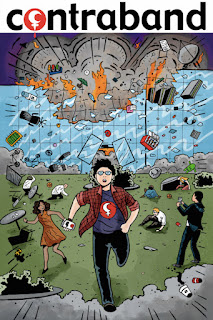
Speaking of the future, 15 years ago, Thomas Behe wrote a graphic novel about “five people’s discovery of this century’s greatest tech convergence - online communities and video mobiles.” Result? A “frighteningly accurate prediction of today’s malignant world of social media - an eerie FORESHADOWING of today’s tech-driven paranoia and online political mayhem.” Thomas submitted the “Contraband” screenplay and although it is longer than ten pages, it is selected since the themes are in line with ROFFEKE’s motto of ‘Friendship, Fun, Freedom’. You can learn more about the Contraband graphic novel here and read reviews of it here, here and here.

Both Tomi Thirteen and Tethered feature a female protagonist. In “Tethered”: “A woman tethered to her ancestors, who she had long misunderstood but not forgotten, is forced to reckon with an experience she cannot explain. You can watch the Tethered screenwriters interview here.

Another screenplay that features a female protagonist is “A short film about a metal head” by Simon X. Frederick: “A mother of two tells a bedtime story. Once upon a time, a young lady discovered the key to her heart…heavy metal.” Simon says: “…I am interested in the psychology of an individual and how society influences us.” You can watch the ROFFEKE screenplay trailer of Simon’s screenplay here.


Read ROFFEKE Official Selections 2021 part 1 here

Monday, December 27, 2021

ROFFEKE Interviews: 2021 and top 21 from previous years

I do not outsource the very important task of posting ROFFEKE interviews on the ROFFEKE blog. This is because I greatly respect the diverse points of views of the interviewed filmmakers. I respect the fact that they have taken time to focus and answer the interview questions, in a world that is increasingly becoming a hotbed of distractions, with a thousand and one things - both important and insignificant - clawing for our limited resource, time.

The interviewees can testify that I tend to leave their interview answers intact. The result is a wealth of insightful and diverse thoughts, processes and influences of ROFFEKE filmmakers from all over the world. I love it!

Below are links to the 2021 interviews, followed by a compilation of the top 21 most viewed ROFFEKE interviews.

Wishing the Kenyan rock scene and the ROFFEKE community a very happy, prosperous, healthy and peaceful 2022!

Mike Messier: Lessons from 2020, New novel, Screenwriting versus Novel writing

Interview: Egor Gavrilin - Director of The Bluestocking Music Video for "Never Ready"

Interview with Teddy Gitau, Kirimi Kiage and Blake Simpson - Scriptwriters of "Tethered"

Interview: Max Sparber - one of the screenwriters of Tomi Thirteen


Top 21 Most Viewed ROFFEKE Interviews

Dr. Robert David Duncan on improv acting, collaborating and giving back (over 1500 views)

Interview: YJ Kim - writer/director of Chemical (over 800 views)

ROFFEKE chats with Nambari Tisa of Murfy’s Flaw about music video directing and the movie store problem! (over 650 views)

Interview: "Elemento" director Nina Paola Marin Diaz (Colombia) - (Over 600 views)

Interview: Fanis Topsachalidis - Director of "Slingshot" (Over 500 views)

Interview: Giancarlo Fusi, screenwriter of "Hell Hound - The Legend of Robert Johnson" (Over 400 views)

Jonathan LaPoma: 67 Awards and Honors for his screenplays (Over 300 views)

Interview: Steven C. Knapp - Director of music video for "Rhythm in the Spirit" by Kansas (284 views)

Of Sons of Robots, Robot Dreams Made Flesh and Wearable Android (277 views)

Interview: Kurt No.5 - directed by Aleksandr Kirienko (271 views)

Interview: Measure of a Man (269 views)

Spirit Dance: A Screenplay by Kitania Kavey (268 views)

Interview: Alexander Thomas, writer/director of "Beverley" (268 views)

Interview: Maxime Guérin - Director of "Save Me a Dance" (267 views)

Interview: Alec Herron - Producer of "The Music Stops Here" (261 views)

Interview: "Brother" director Captain Chambers (252 views)

Interview: "Fat Punk" director Robert David Duncan (248 views)

Interview: "Draught" Writer/Director Artem Ukropov (238 views)

Josep Calle Buendia, The Devil’s Nephew and a Fairy Tale! (208 views)

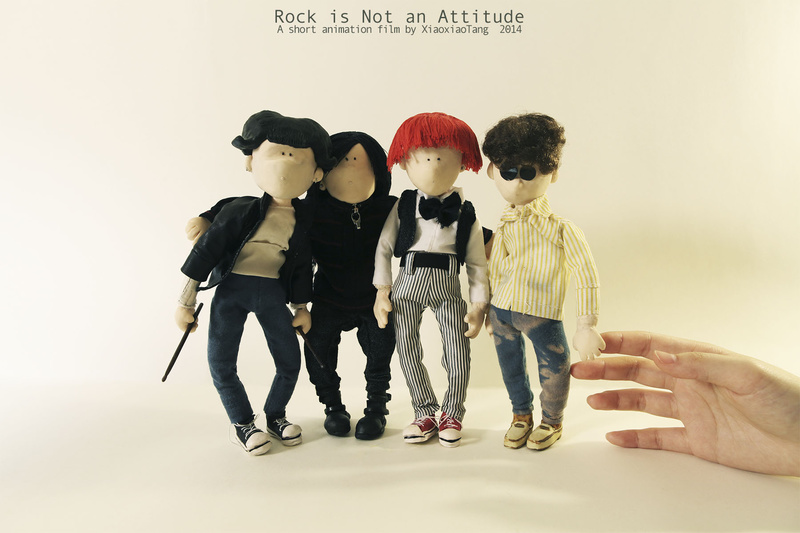
Rock is Not an Attitude: Short Film by XIAOXIAO TANG (203 views)

"Everytime I See You I Go Wild": Directed by Paul D. (203 views)

Thursday, December 23, 2021

Light and Dark - ROFFEKE Official Selections 2021 (Part 1)

The Christmas story is a story of light and dark. That “star of wonder, star of night, star with royal beauty bright” shone on a dark period that was full of challenges. There was no room at the inn for a heavily pregnant young girl and her spouse. A villainous king wanted three wise men to aid and abet him in committing murder. The three wise men were wise enough to pay attention to the world of dreams. “Light and Dark” is one theme running through the 2021 short films, music videos and rockumentaries submitted to ROFFEKE.


The first 2021 submission was “Bluestocking - Never Ready” directed by Egor Gavrilin. It is “a look at 5 personal stories of the members of the band through the prism of magical surrealism with a tinge of steam punk and a dark fairytale.” The second submission was lighter, both in themes and in setting and production. “Red Gate Sessions”, featuring and directed by Marvin Glover “is a live concert short film…the film shows an intimate performance of a select material spanning his career in a stripped-down set, and an intimate setting.”


“Partner - Honey” was directed by Lesley Marshall. “We tackled Penelope Spheeris’ “Wayne’s Word” and attempted to contain her epic rock tribute styles in our own way. I wanted to bring the humour of the movie and also its many parodies to tell a day in the life of the show and also add some layered surrealness.”

You can watch the 2021 ROFFEKE Official Selections here:

Monday, November 15, 2021

Erykah Badu’s “Window Seat”, LUWTEN’s “Sleeveless”, Metallica’s therapy and Therapeia by M.Q. Powell

Please 
Can I take a seat?
Frankly, I could use your company now
 - Sleeveless by LUWTEN 

Window seat 
Don’t want nobody next to me 
I just want a chance to fly 
A chance to cry 
- Window Seat by Erykah Badu 

The music video for Erykah Badu’s Window Seat ends with an assassination: “…Badu’s bare stroll is cut short by a sudden gun shot that appears to kill her instantly” writes Simon Vozick-Levinson in his article “Erykah Badu’s new ‘Window Seat’ video stirs controversy: Is the JFK imagery offensive?” 

The way the “Sleeveless” music video begins is rather similar to the “Window Seat” video ending. LUWTEN’s singer ricochets back and forth, to the rhythm of the four opening shots…I mean, beats. Then she implores us with jazzy, soulful vocals: 

Don’t call the police 
I know it must be strange 
To be seeing me there 

It must have been strange seeing Erykah Badu walking near the famous grassy knoll, shedding her clothes. “Indecent exposure” is a crime and it’s quite possible that someone who saw her slowly stripping must have thought of calling the police. Erykah Badu explained in a video that: “the nudity I think scares the nation as a whole or people in the world as a whole because we are taught nudity is bad. But what I learned is that when it was packaged the way I was with no high heel shoes or long hair or spinning around a pole…people have a hard time processing it when it’s not packaged for the consumption of male entertainment. So they don’t know quite what to do with it or how to place or or what to say.” (Window Seat: Erykah Badu’s explanation” by Kalinda Productions, 2011) 

Sleeveless is “about letting go. You’ll literally see singer Tessa Douwstra wearing a large knitted sweater, that is getting unravelled - she’s getting Sleeveless.” 

 “The unravelling of a band? And then there were two?” asks Lars Ulrich, drummer of Metallica, in one of my favourite rockumentaries “Metallica: Some Kind of Monster”. 

In a Psychology Today article by Hara Estroff Marano titled “Rock Around the Doc: Metallica in Therapy”, the more laid back member of Metallica, Kirk Hammett, revealed that: “along the way I got seduced by the mythology of being a rock star…I was a victim of that myth of being in a rock band for 15, 18, 20 years and having any sort of behaviour instantly justifiable….It became really empty. It was hurting my relationship with my wife. I got into a vicious cycle of wanting to medicate with more booze and drugs.” When Kirk stopped doing the destructive activities “ a lot of the depression went away. The therapy helped me see clearly why these things were happening to me.” 

Look for an unlocked door 
‘Cause there’s something I need to 
Talk about 
Just hear me out 
- Sleeveless by LUWTEN 

 Erykah Badu explained that metamorphosis can be scary: “peeling back layers of things we have learned and separating ourselves from the group is also horrifying because we are afraid of being ostracized and assassinated by the group, if we have our own thoughts and our own mind and our own will and our own direction…Groupthink is actually the term I was protesting.” 

 O, presently I’m standing 
Here right now 
You’re so demanding 
Tell me what you want from me
 - “Window Seat” by Erykah Badu 

Therapeia, directed by M.Q. Powell, begins with the main character standing by a window in her therapist’s office. “Clara Jordan (Marquita Goings), a smart, witty and beautiful business woman is faced with the challenge of her life; Her perfect storm marriage. In the quest to save her marriage with her hard working and ambitious husband, Bobby Jordan (Devin Robinson X), they seek out therapy to confront the very root of their never ending issue.” 

James Hetfield, frontman of Metallica admitted that: “There’s still a part of me that doesn’t want to give away our innermost fears - our big fear of intimacy. I still struggle with this every day. But I know this has the potential to help other bands and other people to just blow away that mystique of the rock idol who leads the perfect life.”

Watch "Sleeveless" by LUWTEN:

Monday, November 8, 2021

Clay Calloway of Sing 2 and Ellery Demarco of One-Hit Wonder (Directed by Amanda Dow)

One-Hit Wonder: “A cab driver takes a former pop star on a one way Twilight Zone-like ride.”

Together with Jane Petrov, Andie Ximenes produced “One-Hit Wonder” and also plays the main character, Ellery Demarco: “As a sci-fi, Twilight Zone–type short, featuring an original song, “Humma Humma Ding Dong,” composed just for the film, I believe that “One-Hit Wonder” will speak to both movie and music lovers, leaving them humming as they exit the theater and pondering what it means to be an artist.”

According to the Sing wiki: “Formerly a rock star legend, Clay isolated himself from the rest of the world after the death of his beloved wife. He later meets Buster Moon and his friends, who aim to persuade him to perform on stage again.” Director Garth Jennings talked about Bono playing Clay Calloway in Sing 2: “He plays this big, old lion called Clay Calloway who was a legendary rock star but has been a recluse for 15 years ever since his wife died. He has just vanished off the face of the Earth.” - New Sing 2 trailer: Director Garth Jennings on casting Bono and working through the pandemic (exclusive)

One-Hit wonder opens with the sound of applause. Emery appears, walking though what seems like the tunnel of a stadium but is probably just an alley. This scene is similar to the one in the Sing 2 trailer where Clay Calloway walks through a tunnel-like section on to the stage. This happens right after the crowd sings along to a U2 song, spearheaded by Scarlett Johansson’s character, Ash: “Johansson’s punk porcupine also comes back for the second film, playing a key role in coaxing Clay Calloway out of his reclusive state.”  

The U2 song is the anthemic “I still haven’t found what I’m looking for”

“In Ayn Rand’s ‘Anthem’, the protagonist, Equality 7-2521, lives underground in a darkened tunnel. However, he emerges, possessing both the symbolic light of his intelligence and an actual light bulb….” - “The Symbolism of Tunnels in Literature" by Linda Emma. When Emery walks through the darkened passage, there is a point of light behind him and he smokes a cigarette. (Check out this article I wrote in 2016 about cigarettes and cinema.) 

Andie Ximenes and Florin Penisoara

Linda Emma notes that: “in the novel and movie “The Perks of Being a Wallflower” the tunnel represents the protagonist’s growth. The movie director, Stephen Chbosky, said that “the tunnel scene is a symbolic rebirth, whether people look at it as a spiritual rebirth or a coming of age.”

Amanda Dow’s Director Statement: “While the film has adversity, it’s about beginnings and a man wanting to find his way back to his love of music at any or all cost to his own. As the director of One-Hit Wonder, I wanted to provide a window into the collision of these worlds.”


Amanda Dow, director of One-Hit Wonder

Tuesday, November 2, 2021

Interview: Max Sparber - one of the screenwriters of Tomi Thirteen

ROFFEKE: What inspired you two to write Tomi Thirteen?

Max Sparber: We've been working on one version of this script or another for a long time. I think the original idea, which has always been central to the story, was that in a post-apocalyptic future, even ordinary jobs would have to be superheroic. Once we settled on the story being set in a city contained inside an entire building, it seemed quite funny to us that the superintendent would have to be a literal superhero.

ROFFEKE: What are the benefits and challenges of working as a duo on one script?

Max Sparber: The benefits are that we have very different imaginations, and so the story is enriched by unexpected details and ideas. We work quite well together, so if we have any challenges it is that we have a lot more ideas than we have time for.

ROFFEKE: Max, you are in your 50s. What has been your screenwriting journey? How long have you been a screenwriter? Highest point so far? Lowest point so far?

Max Sparber: I have been a professional playwright for a long time, but have always wanted to pursue screenwriting. I only began to do it in earnest a few years ago, with my writing partner (and girlfriend) Coco Mault, and almost entirely through the festival circuit. It has been very rewarding -- at this moment we have won 18 contests and were flown out to Los Angeles to pitch a script at a number of different companies. Of course, it's much easier to write a screenplay than to get one produced, and so we are patient, knowing the process is slow, but it can be frustrating trying to attract the attention of agents and managers.

ROFFEKE: Any advice for upcoming screenwriters?

Max: Write the movie you would want to see. There is no way to predict what the market is going to be, or what scripts people are going to want to buy, but if you write something you care about, at least you will have done something that will have been worth doing even if it takes forever to get made.

ROFFEKE: What lessons did 2020 teach you?

Max: That it's important to pursue the things you care about, and to surround yourself with the people and projects that really move and interest you.

Check out Anime, Rock and Tomi Thirteen screenplay by Max Sparber and Coco Mault

ROFFEKE YouTube Playlists

ROFFEKE Animation - World Audio Visual Heritage Day

Photo by: pexels.com/@roman-odintsov


ROFFEKE South-South

Photo by: pexels.com/@jaksonmartins


ROFFEKE Halloween

Photo by: pexels.com/@lemonzandtea


Thursday, October 28, 2021

Anime, Rock and Tomi Thirteen screenplay by Max Sparber and Coco Mault

“Whether you’re a die-hard Otaku (a young obsessed fan) or a total newbie to anime, there’s plenty of Japanese music to discover on Spotify.”

 EXT. OTAKUKING HIGH RISE - DAY 


 “In this anime-inspired half-hour comedy, set in a future in which all of humanity lives in giant arcologies protected by superheroes, a 13-year old hero must navigate life in junior high school while battling the superintelligent insect larva that has moved into the basement.” - Synopsis of “Tomi Thirteen”, a screenplay by Max Sparber and Coco Mault. #ROFFEKEOFFICIALSELECTION2021


  Watch Teaser of Tomi Thirteen screenplay. Music: “Miyagisama - The Haunted Dollhouse (Cinematic: Halloween, Creepy)" by MIYAGISAMA (from pixabay.com)


Tuesday, October 19, 2021

Satire in Horror Films: The Case of “Witchin” - directed by Christina Diamantara

“Both comedy and horror are often viewed by critics and the general public as “low brow” genres with little social relevance and few redeeming qualities.” - Dr. David Gillota, associate professor of English at University of Wisconsin - Platevlle. 2019.

On October 3rd, 2019, Dr. Gillota participated in a forum that examined “how satire in horror films exposes systemic societal issues.” He provided an analysis of Jordan Peele’s “Get Out” and argued that this film “straddles the line between humor and horror in order to critique systemic racism and expose the hypocrisy of white liberalism.”

It can be argued that Christina Diamantara’s short film “Witchin” does straddle this humor-horror line so as to critique systemic patriarchy and expose the hypocrisy of sexism and misogyn. Pallavi Prasad outlines the difference between these three intertwined concepts in her article “The Difference Between Sexism and Misogyny, and Why It Matters": “If patriarchy is the overarching social organization in which men hold the power, and from which women are largely excluded, then misogyny and sexism are the two drivers that uphold this system. If patriarchy is the state with a capital S, the sexism is the ideology, the legislative pillar….Misogyny, then, is the method. It is both the executive and the judiciary, in that it enforces the ideology and reprimands where there is a breach of law. It is the hostile policing of those women who violate patriarchal norms and expectations, thereby setting a precedent for the cost of feminist transgression.”

In her Director Statement, Christina Diamantar highlights the fact that her film is about “a young idealistic witch, on her quirky-spells-and-pink-glitter-filled quest to find the notorious and elusive Big Dick Energy ingredient…” Although the story is set in “the world of fantasy and make-believe” Christina insists that her short film “is deeply rooted in human reality, and more so by the current social context that first inspired it.”

The Instagram hashtag #bigdickenergy is one of the elements that inspired “Witchin”. Christina finds that “this idea - that your confidence is as big as the size of your penis - is not only perpetuating a toxic interpretation of masculinity, but is also inevitably suggesting that, yet again, confidence is a male thing. I thought it would be funny to use this term as a physical ingredient - and in a way create a satirical metaphor about women who do all the right things, in terms of working towards their goals, only to realize that the  most important step for their success is to find some way to capture the essence of male privilege.”

Christina Diamantar - Director of "Witchin"

In her article titled “Standing Up: What Men Can do to counter systemic sexism in the office”, Liz Elting writes: “With privilege comes power, and there are so many ways you can use that power for good: speak up and call out sexism and misogyny amongst your peers, stand up for and champion women, point out when a woman colleague came up with a great idea (especially when credit is misatrributed to a man), hire and promote women, and the big one I’ll focus on today, opt out of boys’ clubs and fratty workplace culture.”

Here is the trailer for “Witchin” plus two insightful interviews where Christina further expounds on “Witchin” and her overall filmmaking journey and explains more about the secret ingredient BDE.